Battery lanterns
Safer than candles and more useful than one flashlight in shared rooms.
View Streamlight Siege AA on Amazon PrepSignals
Build My Kit
PrepSignals
Build My Kit
Power preparedness
A detailed power outage checklist for before an outage, the first minutes, 24 hours, 72 hours, and longer disruptions.
Free first-day checklist
Get the print-friendly outage checklist for safety, phone power, lights, fridge/freezer decisions, household needs, and what to restock after power returns.
Optional backup-power resource
Read our Energy Revolution review if you want to compare additional backup-power ideas after lighting, charging, and food-safety basics are handled.
Read our Energy Revolution reviewShop the outage plan
These are the highest-intent power purchases for apartments, families, storms, and short disruptions.
Affiliate disclosure: As an Amazon Associate I earn from qualifying purchases.
Safer than candles and more useful than one flashlight in shared rooms.
View Streamlight Siege AA on AmazonPhone charging is one of the easiest, most universal outage wins.
View Anker Nano Power Bank 30W with Built-In USB-C Cable on AmazonUseful for storm alerts, utility updates, and times when phone service is unreliable.
View Midland ER310 Emergency Crank Weather Radio on AmazonLarger option for readers who need more runtime after basics are covered.
View Jackery Explorer 300 on AmazonTip: start with lights and phone charging before buying bigger backup power.
After the free checklist
Start with safe light and phone power. Add food-safety tools only if your freezer or fridge risk is real. Save bigger backup-power decisions until the small gaps are handled.
Affiliate links are optional. Use the checklist first; buy only what closes a confirmed gap.
A power outage checklist should help you make the first few decisions quickly: stay safe, preserve phone battery, protect food, set up lights, and avoid unsafe backup-power mistakes. This page is organized by time window so you can use it before an outage, during the first minutes, and through longer disruptions.
Print or save the checklist, then adapt it for your home, apartment, medications, pets, building rules, and local weather risks.
By 72 hours, routines matter: safe meals, device charging, temperature control, and communication. Reassess food safety, water, medications, and whether you need outside support.
A one-week outage requires more than flashlights. Plan for laundry, trash, medications, pet care, work/school communication, transportation, and safe heating or cooling. Know local warming/cooling centers and building procedures.
| Step | Action |
|---|---|
| Immediately | Keep doors closed; note outage time |
| During outage | Use thermometers; avoid browsing |
| After power returns | Follow FoodSafety.gov guidance; when in doubt, throw it out |
Use the FoodSafety.gov outage chart for food safety decisions.
Charge the phone used for alerts first. Keep others in airplane mode or powered down if needed. Use short charging sessions, car charging only when safe, and keep cables with power banks.
| Room | Light |
|---|---|
| Bedroom | Flashlight or headlamp |
| Kitchen | Lantern |
| Bathroom path | Small battery light |
| Entry | Flashlight near keys |
Apartment households often do best with power banks, rechargeable lanterns, no-cook food, and building communication. Avoid fuel storage or generator use where unsafe or prohibited.
Carbon monoxide warning: never run generators indoors, in garages, on balconies, or near windows or doors. Review CDC carbon monoxide safety guidance and manufacturer instructions.
Even a small household benefits from clear roles. One person can check breakers and utility updates. Another can set up lights. Another can handle pets, children, or refrigerator decisions. Written roles prevent everyone from doing the same task while important details are missed.
If you live alone, write the sequence down and keep it visible: safety, lights, phone, refrigerator, updates, neighbors, food, temperature. A short written list is helpful when an outage happens at night or during bad weather.
Phone battery is a limited resource during longer outages. Decide which phone is the primary update device. Send short check-in texts instead of long calls when networks are strained. Keep a written list of important numbers in case a phone dies or is damaged.
For families, choose an out-of-area contact when appropriate. Local networks may be busy, but a short message to someone outside the affected area can help coordinate updates. Keep expectations realistic; this is a backup communication habit, not a guarantee.
When power returns, do not immediately assume everything is normal. Check appliance temperatures, inspect food, recharge power banks, reset clocks, and restock anything you used. Write down what worked and what was frustrating. The best time to improve an outage plan is immediately after a real outage or practice run.
You do not need a dramatic drill to test the plan. Pick one evening and practice using only your outage lights for an hour. Confirm that power banks are charged, flashlights are where expected, and everyone knows where the checklist is. Make a no-cook dinner from pantry food and note what was inconvenient.
Practice reveals small issues before they matter: dead batteries, missing cables, weak lanterns, confusing food storage, or a refrigerator thermometer you never bought. Fixing those details is usually inexpensive and makes the next real outage calmer.
Comfort can become a safety issue in extreme heat or cold. Before outage season, identify where your home stays coolest or warmest, what windows should remain shaded, and where you could go if the indoor temperature becomes unsafe. Keep extra blankets, seasonal clothing, and battery-powered fans or safe cooling strategies where appropriate. Never use outdoor cooking equipment, grills, or generators indoors for heat.
If someone in the home is medically vulnerable, plan earlier rather than later. Write down local cooling centers, warming centers, trusted neighbors, and transportation options.
After an outage, restock immediately while the experience is fresh. Replace used batteries, recharge power banks, refill the food and water you used, and update the checklist with anything that was missing. If a flashlight was hard to find, move it. If a power bank was dead, create a recurring charging reminder. If the refrigerator decision was confusing, add a thermometer and print the food-safety guidance.
This short reset is what turns each outage into a better plan for the next one.
Small homes and apartments do not need a complicated backup-power setup to be safer and easier to manage. A few charged power banks, a lantern in the main room, a flashlight near the bed, and a printed checklist can solve the most common problems. Keep the plan lightweight enough that you can maintain it every month.
If you share walls, balconies, or hallways, be extra careful with cooking and power equipment. Follow building rules, avoid anything that creates carbon monoxide risk, and prioritize safe lighting, communication, food, and water over improvised power solutions.
Charge devices, test lights, prepare food and water, and print important contacts.
Safety, information, and preserving phone battery.
Think about food safety, communication, temperature, medication needs, and community support.
Keep one primary phone for updates, use low-power mode, and charge in short planned sessions.
LED lanterns, headlamps, flashlights, and spare batteries or rechargeable options.
No. Never run generators indoors, in garages, on balconies, or near windows.
Use power banks, rechargeable lanterns, safe temperature plans, and building communication channels.
Printable planners
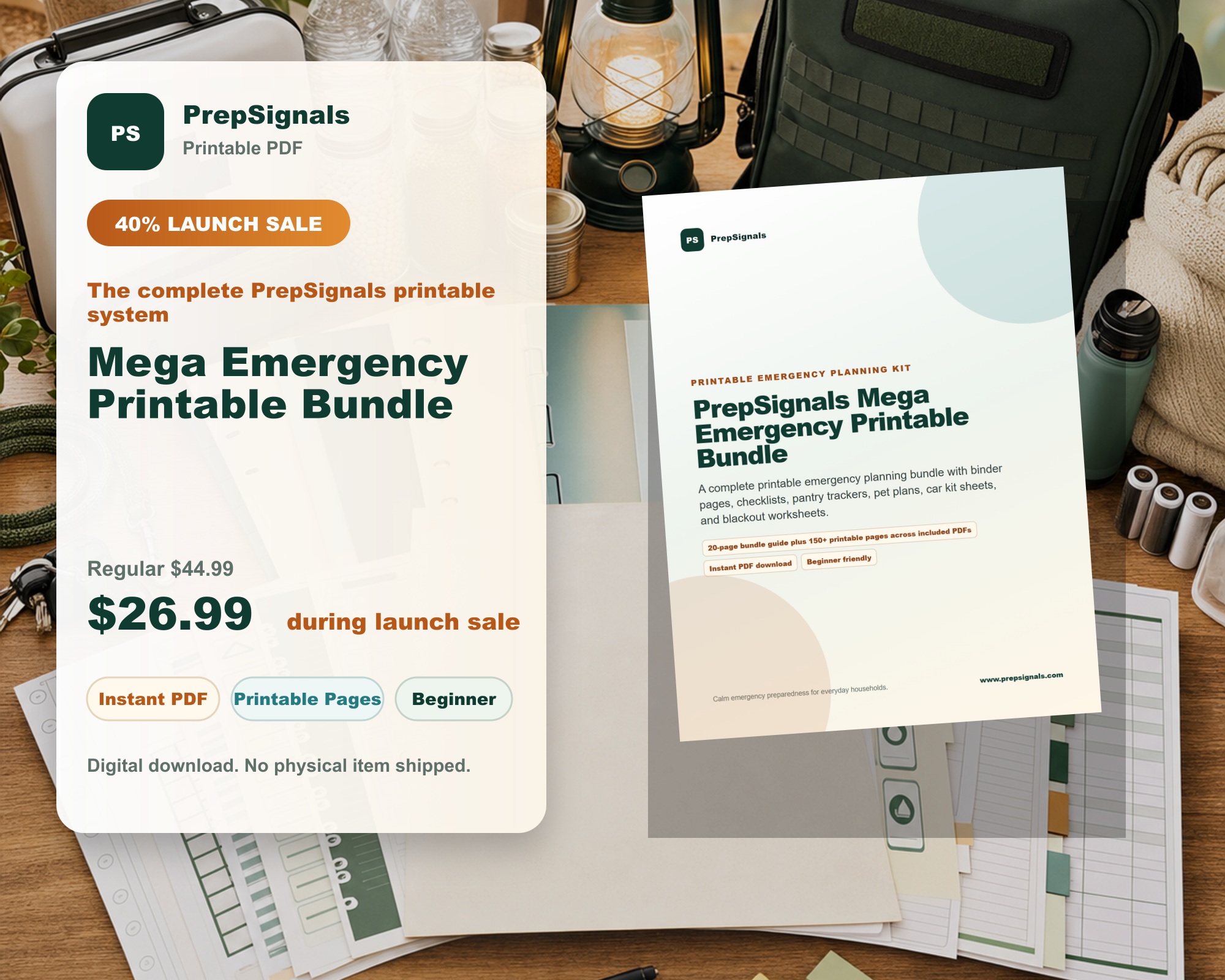
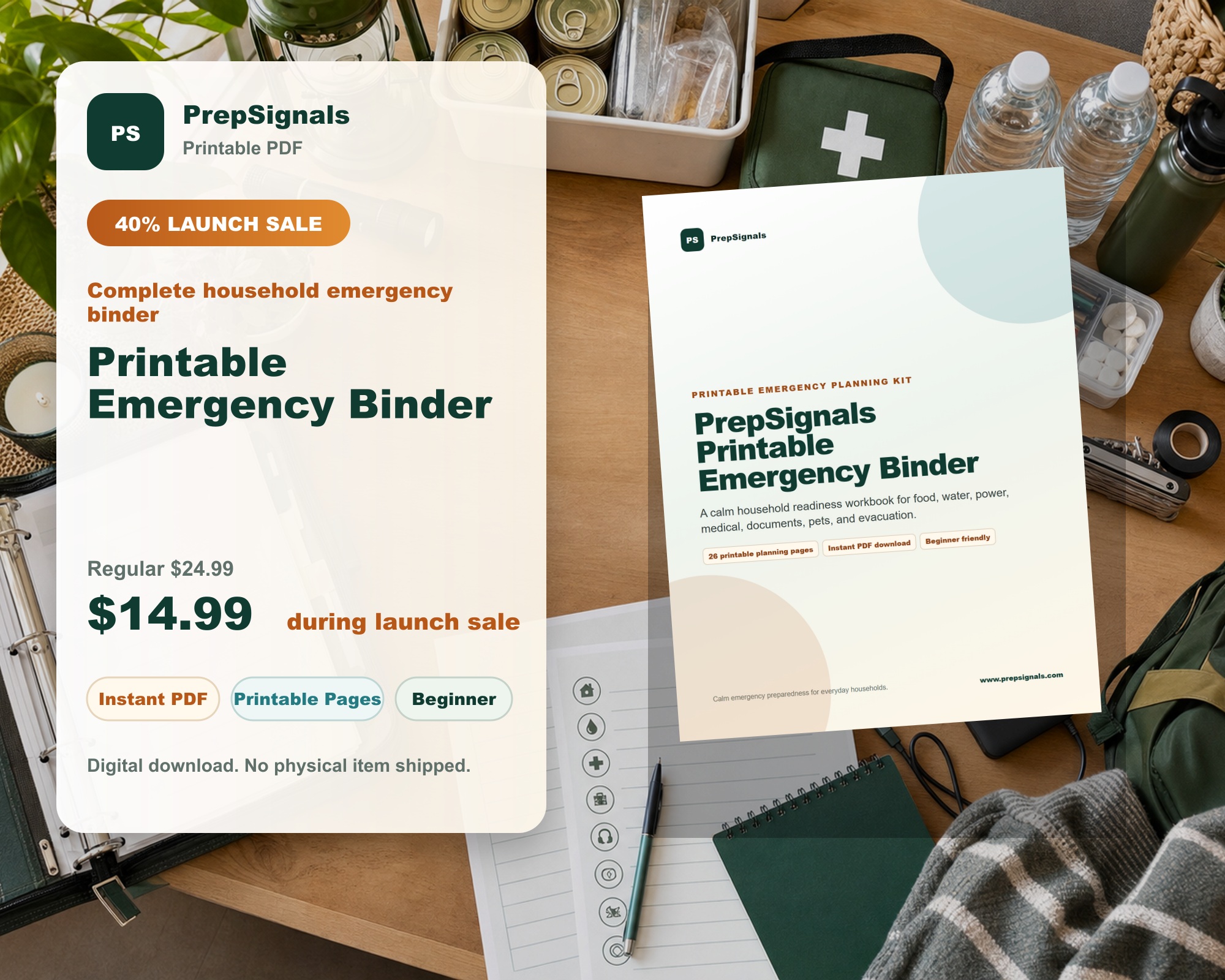
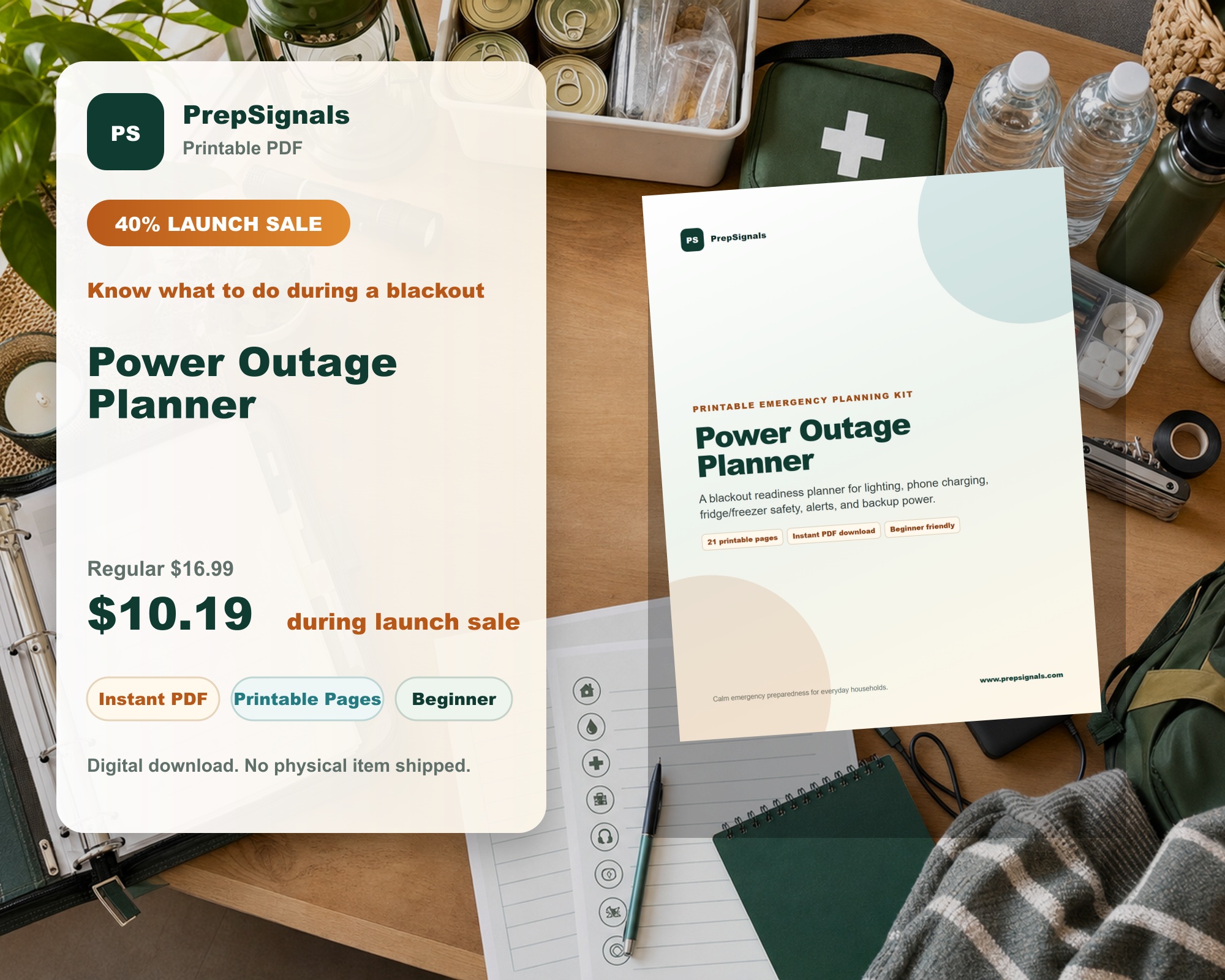
PrepSignals Etsy printables turn emergency planning into clean PDF pages: binders, checklists, pantry trackers, power-outage planners, pet kits, car kits, and family plans.