Water containers
The most important first layer.
View WaterBrick Standard 3.5 Gallon on Amazon PrepSignals
Build My Kit
PrepSignals
Build My Kit
PrepSignals guide
A useful emergency kit does not need to start expensive. The first $100 should cover boring supplies that solve the most common outage problems.
Affiliate disclosure: this page includes Amazon affiliate links. Buy only what solves a real household gap.
Spend the first dollars where they solve the most urgent problems during a short outage.
The biggest beginner mistake is buying impressive gear before the basics work.
A budget kit is better when the household can find and use it.
Buy water storage, a headlamp or lantern, a USB power bank, a manual can opener, and basic first aid before buying specialty survival gear.
Relevant options
These Amazon links use the PrepSignals affiliate tag. Check current details, dimensions, safety notes, reviews, and suitability on Amazon before buying.
Affiliate disclosure: As an Amazon Associate I earn from qualifying purchases.
The most important first layer.
View WaterBrick Standard 3.5 Gallon on AmazonRoom light without candles.
View Streamlight Siege AA on AmazonPhone charging under budget.
View Anker Nano Power Bank 30W with Built-In USB-C Cable on AmazonUseful beyond emergencies.
View First Aid Only 298 Piece All-Purpose First Aid Kit on AmazonRelated PrepSignals guides
Yes, if you focus on water, light, phone power, shelf-stable food, basic first aid, and documents before expensive upgrades.
Start with water, a safe light source, a power bank, a manual can opener, and basic first aid.
Use the kit builder or store to turn this guide into one practical next step.
Open Kit BuilderPrintable planners
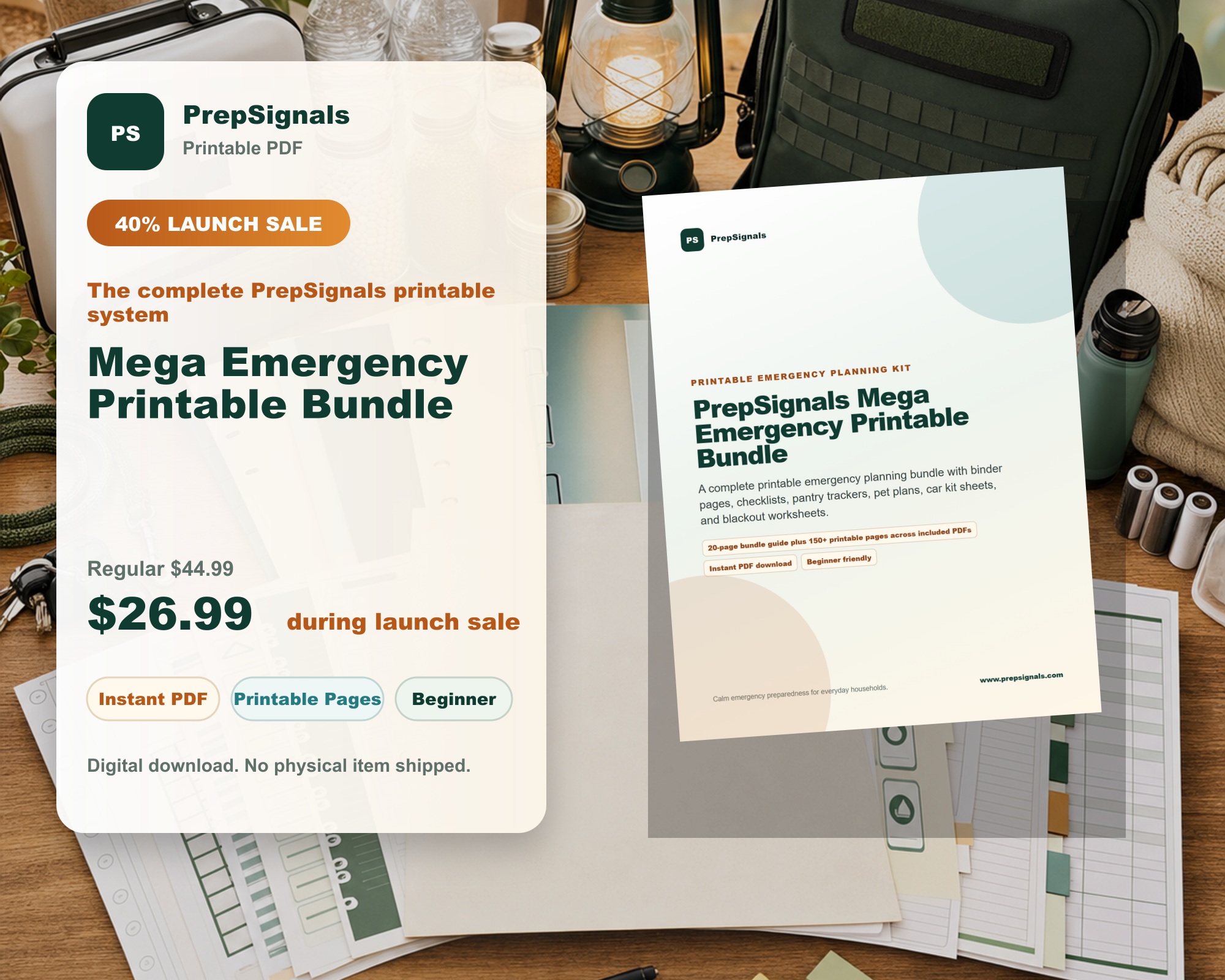
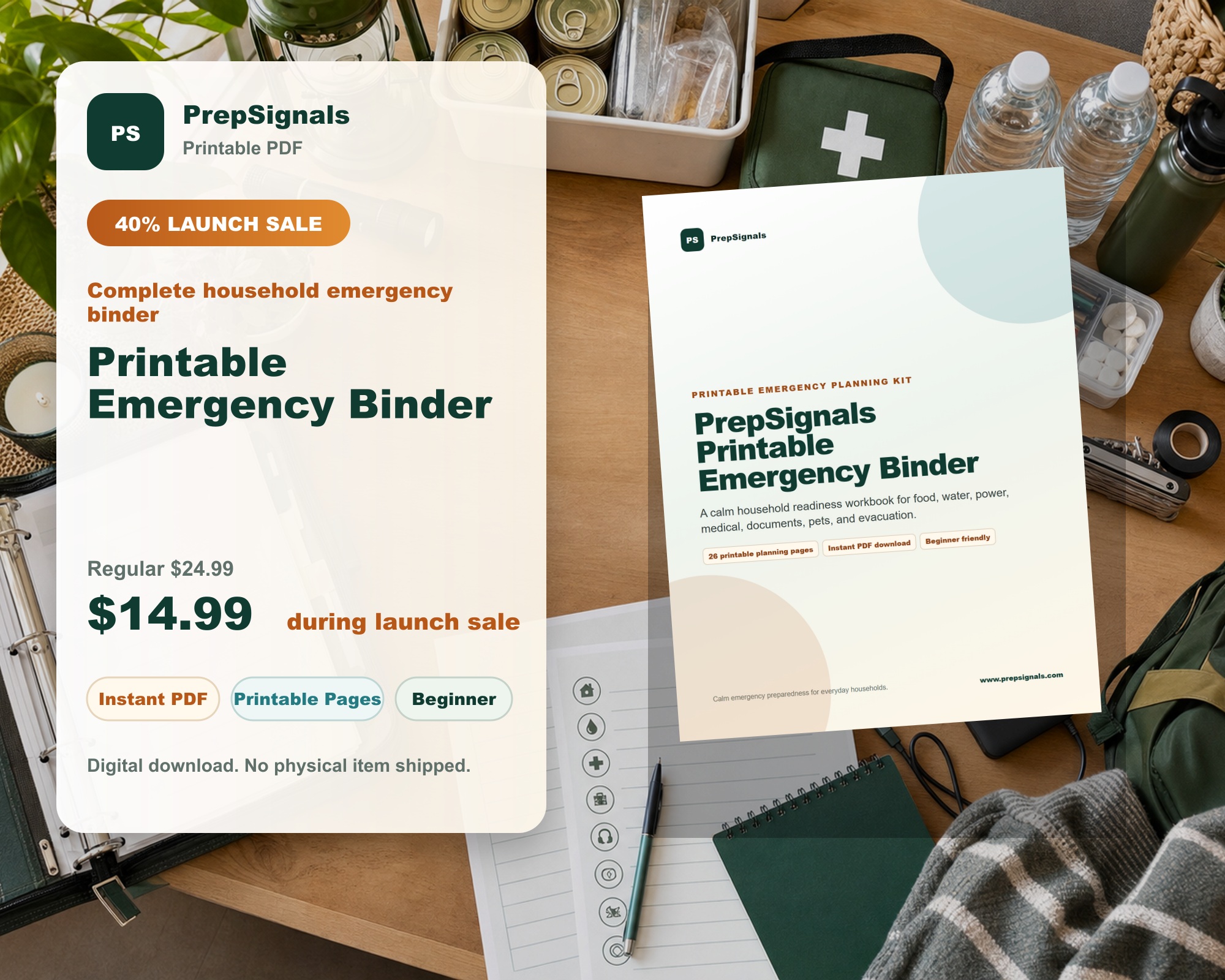
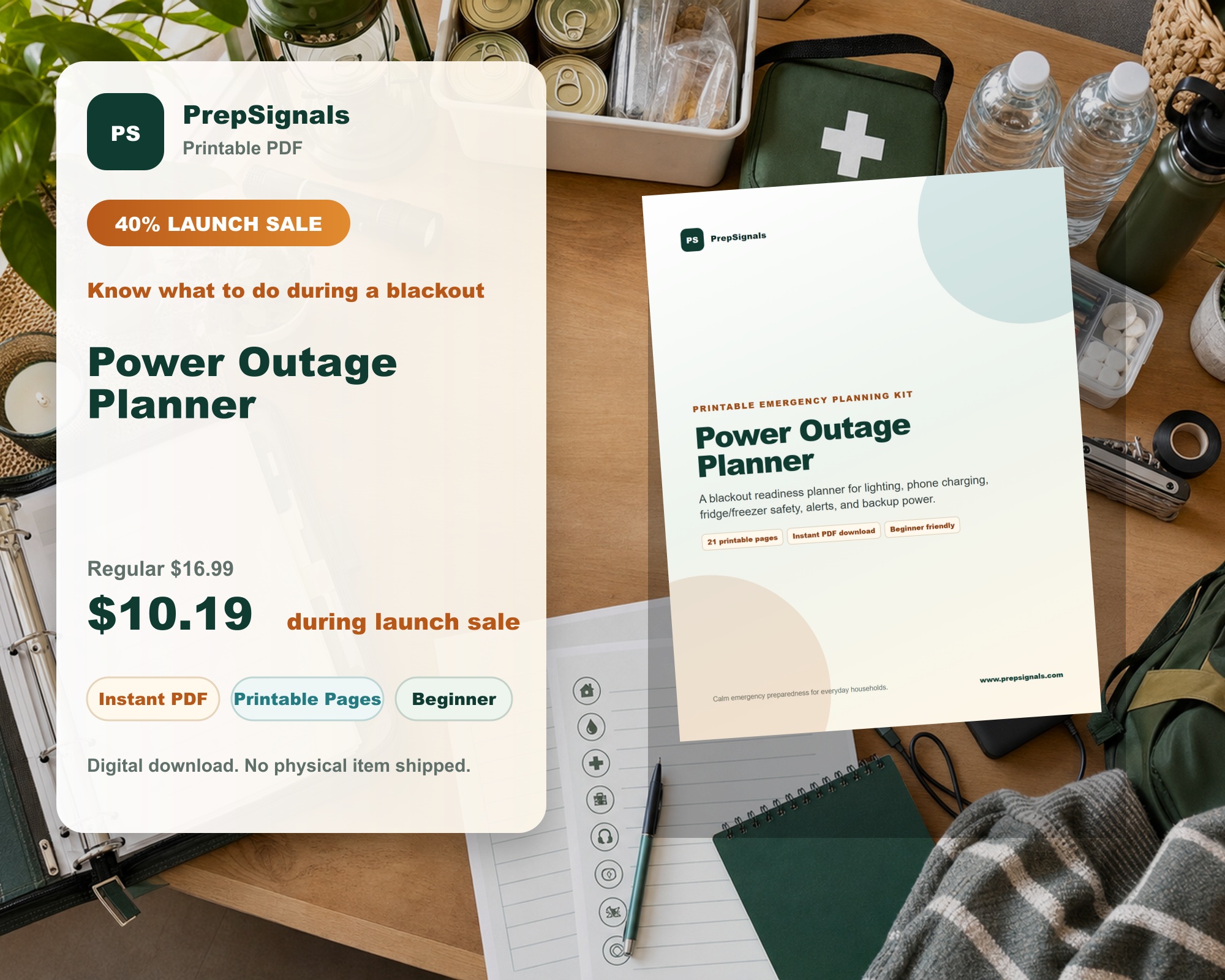
PrepSignals Etsy printables turn emergency planning into clean PDF pages: binders, checklists, pantry trackers, power-outage planners, pet kits, car kits, and family plans.